

I've been building software and websites for over thirty years. I've written code for The Pentagon, designed systems for the US Air Force, and built solutions for banking and insurance companies across three continents. I've watched every major shift in how humans interact with computers, from command lines to touchscreens, from dial-up to AI.
This week, I found myself in an argument on LinkedIn about whether it's acceptable to use AI to write a social media post.
That gap between what AI actually is and what people think it threatens tells you everything about where this debate is heading. And it is not heading where most people expect.
It started on a post by Michael Bud, a strategist and author who wrote something I thought was spot on. He pointed out that people keep dismissing thoughtful posts by saying "that's AI" as if identifying the tool invalidates the argument. He called it "AI dismissal bias," a pattern that has since hardened into outright prejudice against clear writing. I agreed. I said that if AI helps someone who struggles with spelling, grammar, or punctuation say what they actually mean, more clearly than they ever could before, then I'm completely in favour.
The responses came quickly. They split into patterns I've seen before. And honestly? They frustrated me. Not because people disagreed. Disagreement is useful. What frustrated me was how often the arguments revealed something deeper than a preference about tools.
The Arguments People Are Making
John Grabowski, an SEO copywriter, quoted my comment and responded: "I went to ordinary city-funded public schools. But I got an education. Today I know more about history, geography, mathematics, English and science than at least 95% of the people out there." He referenced the Founding Fathers and the Ancient Greeks writing without word processors. "They didn't need that horseshit then and we don't need it now."
Daryll Esposito, who works in management and advocacy, was more concise. He called my position a "race to the bottom" and pushed back on the idea that AI adds value to communication. When I used a Henry Ford quote to illustrate how innovation often outpaces what people say they want, he replied: "The purpose of creativity and communication is not to be 'faster.' Your analogy is bad."
Matthew Gene Claybrook, an author and artist, went furthest: "If you're using AI, any model, then you are not using your ideas. You're using other creatives' stolen effort to make yours look as good." He called AI "creative theft" and argued that anyone using it is telling their audience they don't care about authenticity.
Each of these arguments sounds reasonable on first reading. Each of them misses the point. But before I explain why, I need to address the one person in this debate who got closest to a real insight.
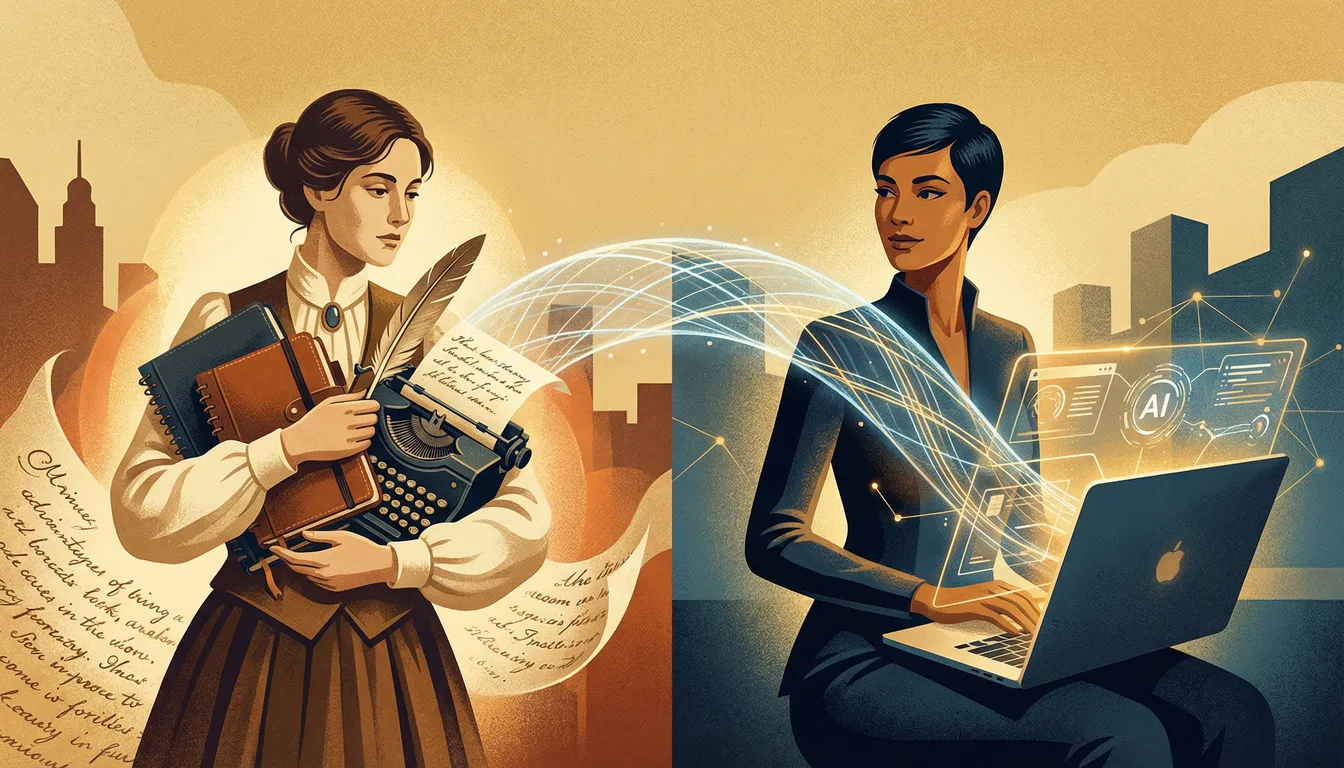
The Strongest Argument Against Me
Clinton Thomas, a communicator with nearly two decades of professional experience, was careful to note that he is not someone who jumps out and says "that's AI!" Then he made a point that deserves a proper response:
"The problem isn't that something 'looks polished'. It's that everything is now polished the same way, so nothing stands out. Individual AI users are comparing the work they are now generating with AI to the work the previously generated without it and saying 'Hey! This is clearer and I did it faster! It's an easy win!' But they aren't necessarily comparing their new AI generated work to everyone else's new AI generated work, so they don't realise they now look exactly like everyone else."
- Clinton Thomas, LinkedIn
He pointed to the artwork on Michael Bud's post: "It looks good, and I'm sure you generated it quickly. It also looks exactly like 30 other images in my feed today." Tom Shand, a coastal engineer, agreed: "none of that matters if you're now lost in a sea of sameness."
Clinton is right about the risk. The homogenisation problem with AI output is real. If you use AI without injecting any of your own thinking, experience, or perspective, you will produce content that looks and sounds like everyone else's.
Where I part company with Clinton is in the conclusion. The solution to sameness is not to abandon the tool. It is to use it with more intent. The people producing generic AI output were producing generic output before AI arrived. Templates, stock phrases, borrowed ideas. AI did not create mediocrity. It made mediocrity faster.
The competitive advantage was never in the writing. It was always in the thinking. AI just made that truth harder to ignore.
What Everyone Is Missing
Here is what struck me about every argument against AI-assisted writing: not one of them was actually about writing.
John's argument was about effort and education. He worked hard to learn grammar. The idea that a tool could give someone that capability without the same investment feels unfair. I understand the feeling. Thirty years ago, I spent months mastering database query languages that took real dedication to learn. Today, someone can describe what they want in plain English and an AI writes the query in seconds. That does not make my years of learning worthless. It means the barrier has moved. The value is no longer in knowing the syntax. It is in knowing what to ask for and why. Ironically, even the AI companies struggle with this. OpenAI recently admitted GPT-5.2 "screwed up" writing quality by prioritising technical benchmarks over clear prose.
Daryll's argument was about authenticity. He sees AI-assisted clarity as a trick, as if the reader is being deceived. But Barbara Ruth Saunders, a writer, editor, and writing coach, cut through that neatly: "People do utilitarian writing every day that's not intended to be creative and merely transmits data." Most writing in business is not creative expression. It is information transfer. If a tool makes that transfer clearer, nobody has been tricked. They've been served better.
Matthew's argument was about ownership and theft. There is a legitimate, complex debate about AI training data and intellectual property. But that debate does not apply to a small business owner using AI to write a clearer email to their customers. Conflating a plumber in Kettering improving his invoice descriptions with corporate AI training on copyrighted datasets is a category error. These are different acts entirely, with different ethical weight.
And Clinton's argument was about distinctiveness. It is the most valid concern, and I have addressed it directly. But I will add this: the sameness problem predates AI by decades. Template websites in 2010. Stock photography in 2005. Clip art in 1995. Every accessible creative tool produces a wave of sameness. Every wave eventually breaks when the most capable users learn to wield the tool distinctively. We are in the early wave. It will pass.
Three Decades of Watching People Resist Tools
I have been working in technology since the early 1990s. Computer science, AI programming, systems architecture, SEO, web development. I have built and delivered systems for organisations where the stakes were not abstract: the US Air Force, The Pentagon, major banking institutions, international insurance companies. In those environments, you do not resist tools because they feel uncomfortable. You evaluate whether they work, and if they do, you deploy them.
Every significant technology shift I have lived through produced the same pattern of resistance.
When desktop publishing appeared, professional typesetters said it would destroy design. It didn't. It raised the floor. The best designers adapted and thrived. When email replaced formal letters, people said it would destroy professional communication. It changed what "professional" meant. The people who adjusted set the new standard. When search engines made information instant, academics warned it would destroy critical thinking. It changed what mattered. Knowing where to find information became less valuable than knowing what to do with it.
Every single time, the people who adapted used the new tools to amplify skills they already had. The people who refused did not preserve quality. They preserved a version of quality that was already being replaced.
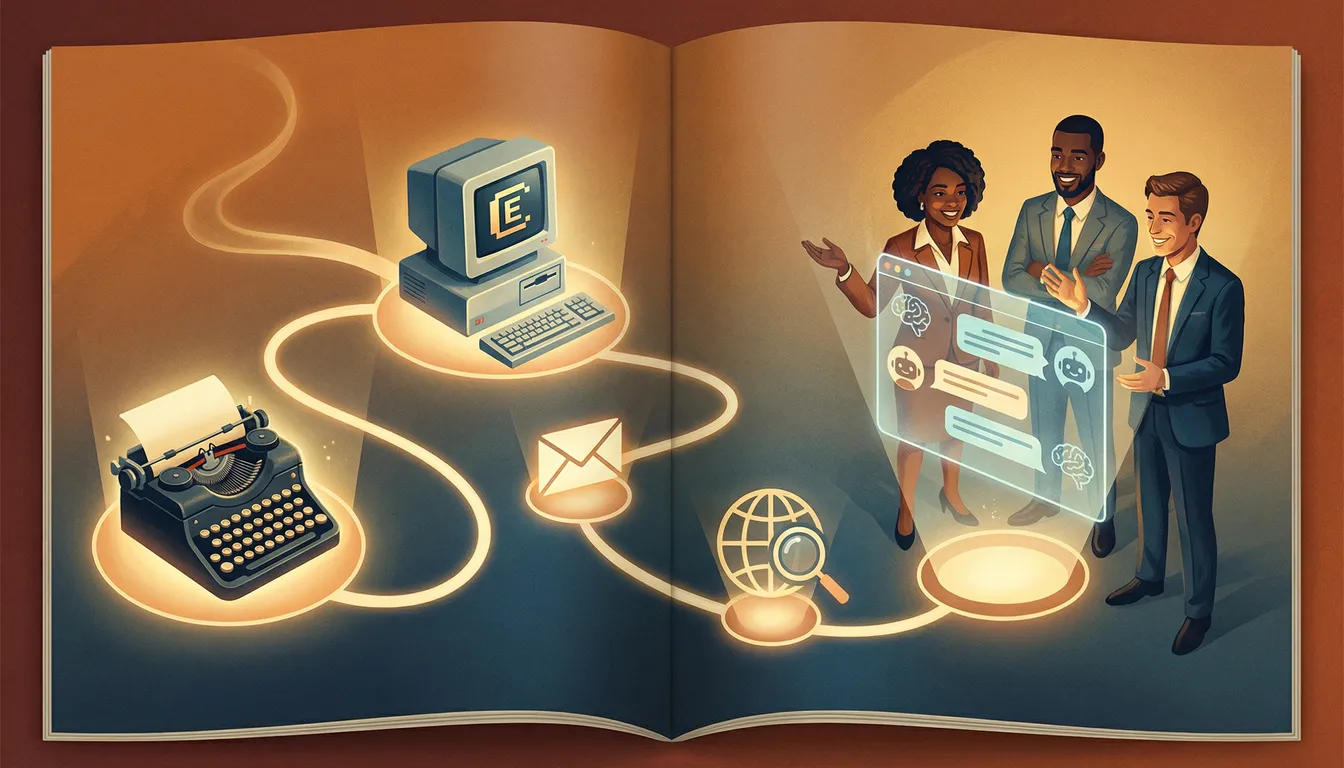
That is what is happening now. The baseline for clear, well-structured communication is rising. If your competitive advantage was your ability to construct a grammatically correct paragraph, that advantage is disappearing. Not because AI took it from you. Because the world moved on. The new advantage is thinking clearly, knowing your subject deeply, and having something worth saying.
In SEO, and specifically the shift from SEO to GEO, I have watched this pattern for over twenty years. The best practitioners have always been the ones willing to say "I don't know" and then go find out. The worst ones bluffed. AI has not changed that dynamic. It has accelerated it. The bluffers are easier to spot now because AI gives everyone access to the surface-level answers they used to sell as expertise. If you were coasting on your ability to sound knowledgeable, that game is over.
What This Debate Is Actually About
The AI writing debate is about identity. Not tools, not quality, not creativity. Identity.
People who built their professional reputation around their ability to write well feel threatened when a tool makes that ability accessible to everyone. That is a human reaction, and I do not dismiss it. But the response to that feeling matters enormously. When that threat response hardens into anti-AI identity rather than informed critique, the person stops learning and starts performing.
You can use the tool to push your own work further, to places nobody else can reach because they lack your experience, your perspective, your specific knowledge. In an age where being chosen by AI systems depends on the quality of what you communicate, that distinctive voice matters more than ever. Or you can spend your energy arguing that nobody else should be allowed to close the gap.
John referenced the Ancient Greeks writing brilliantly without technology. He's right that they did. They also had scribes, translators, editors, and assistants. Socrates did not write his own philosophy down. Plato did it for him. The greatest thinkers in history used every available tool and support system to communicate their ideas more effectively. Using AI for the same purpose is not a departure from that tradition. It is a continuation.
Honestly? I don't care whether something I read was written with AI assistance. I care whether it is true. Whether it is useful. Whether it is worth my time. Those are human qualities that no tool creates or destroys.
The businesses I work with every day need to communicate clearly with their customers. If AI helps a plumber in Kettering write a better response to an enquiry, if it helps an accountant explain a complex tax change, if it helps a small business owner write a proposal they are actually proud to send, then AI has done its job. Not by replacing their thinking, but by removing the barrier between what they meant and what they managed to put on the page.
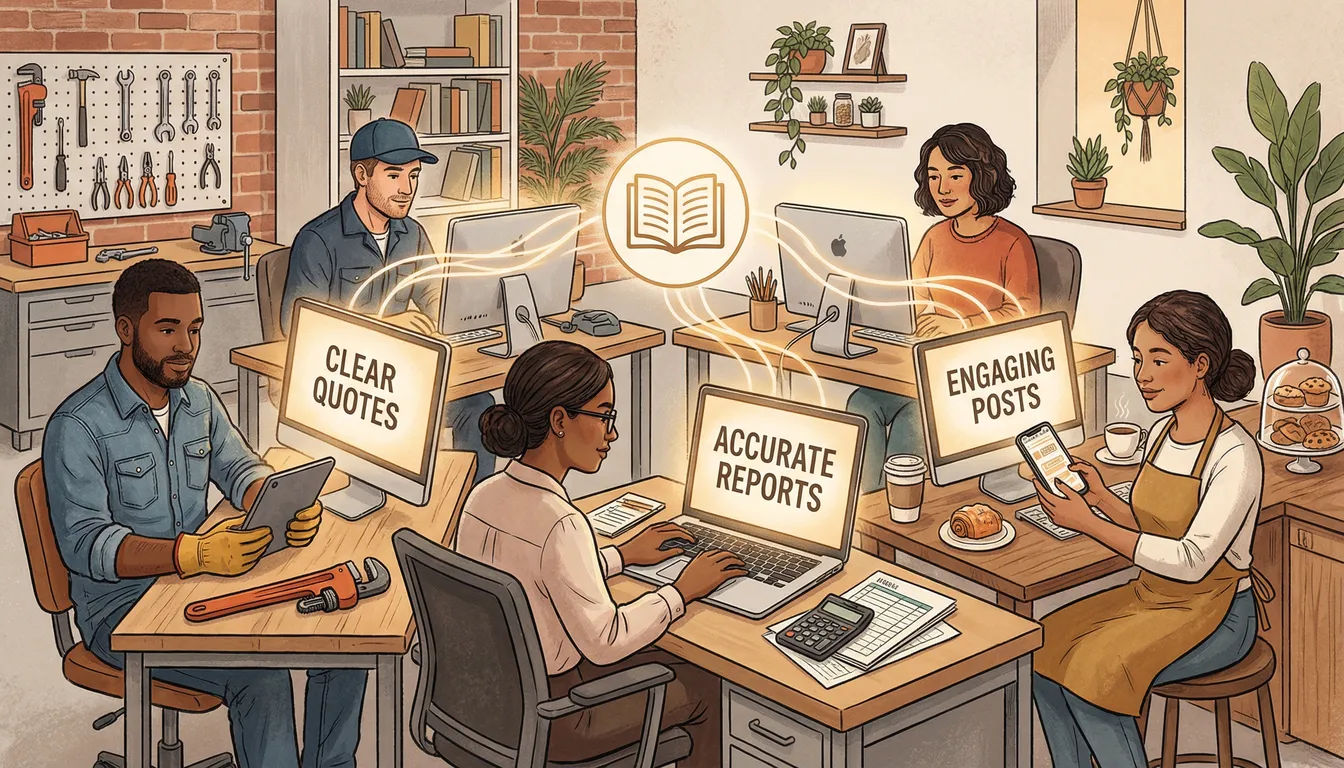
That is not a race to the bottom. It is not creative theft. It is not a crutch.
It is exactly what good technology has always done.
Frequently Asked Questions
Is AI-written content bad for SEO?
No. Google evaluates content quality, not production method. Poorly written content hurts SEO whether a human or AI produced it. Well-structured, authoritative content helps SEO regardless of how it was created. What matters is accuracy, usefulness, and real expertise, not the tool used to express it.
Does using AI to write mean you lack expertise?
Only if you outsource your thinking along with the writing. Using AI to express an idea more clearly is no different from using a spell-checker or hiring an editor. The expertise is in what you know and what you have to say. The writing is the delivery mechanism, not the substance.
Is AI-generated writing considered plagiarism?
Using AI to help you write your own ideas, emails, proposals, or business content is not plagiarism. The separate debate about AI training on copyrighted works is a legitimate intellectual property question, but it is distinct from the question of whether individuals should use AI writing tools for everyday business communication.
Will AI replace human writers?
AI will replace writers who produce generic, undifferentiated content that could have been written by anyone. It will not replace writers who bring real expertise, original perspectives, and deep subject knowledge. The value of writing was never in the grammar. It was in the thinking, and that remains human.
Does AI make all content look the same?
It can, if used without intent or personal input. Default AI output does tend toward a recognisable style and structure. But the same was true of templates, stock photography, and generic copywriting before AI existed. The solution is to layer your own experience, voice, and perspective on top of the AI output, not to avoid the tool entirely.
Should businesses disclose when they use AI for content?
There is no legal requirement in most jurisdictions, but transparency is generally good practice. What matters more than disclosure is accuracy. Whether AI helped you write something or not, your name is on it, and you are responsible for ensuring what it says is true and useful. The regulatory implications of this are significant. See our guide to executive accountability for AI-generated content.
Is the AI writing debate really about identity rather than quality?
Largely, yes. Many arguments against AI writing, when examined closely, are about the effort required to develop writing skills and the professional identity built around that effort. When a tool makes competent writing accessible to everyone, people whose competitive advantage was their writing ability face an identity challenge, not a quality problem.
How should businesses approach AI writing tools?
Use them as amplifiers, not replacements. AI is excellent at structuring ideas, improving clarity, and removing friction from business communication. It is poor at generating original insight, verifying facts, or understanding your specific business context. Use AI for the mechanics. Supply the expertise and judgement yourself.
Need Help Communicating Clearly With Your Customers?
Whether you use AI or not, what matters is that your message reaches the right people in the right way. We help UK businesses structure their content, improve their AI visibility, and communicate with clarity. If your website is not saying what you mean, we can fix that.
Get in TouchSources
This article is based on a public LinkedIn discussion in January 2026. All quotes are from public LinkedIn comments. For context on how and why public social media comments can be quoted in editorial content, see our guide on how to legally quote public social media comments.


