
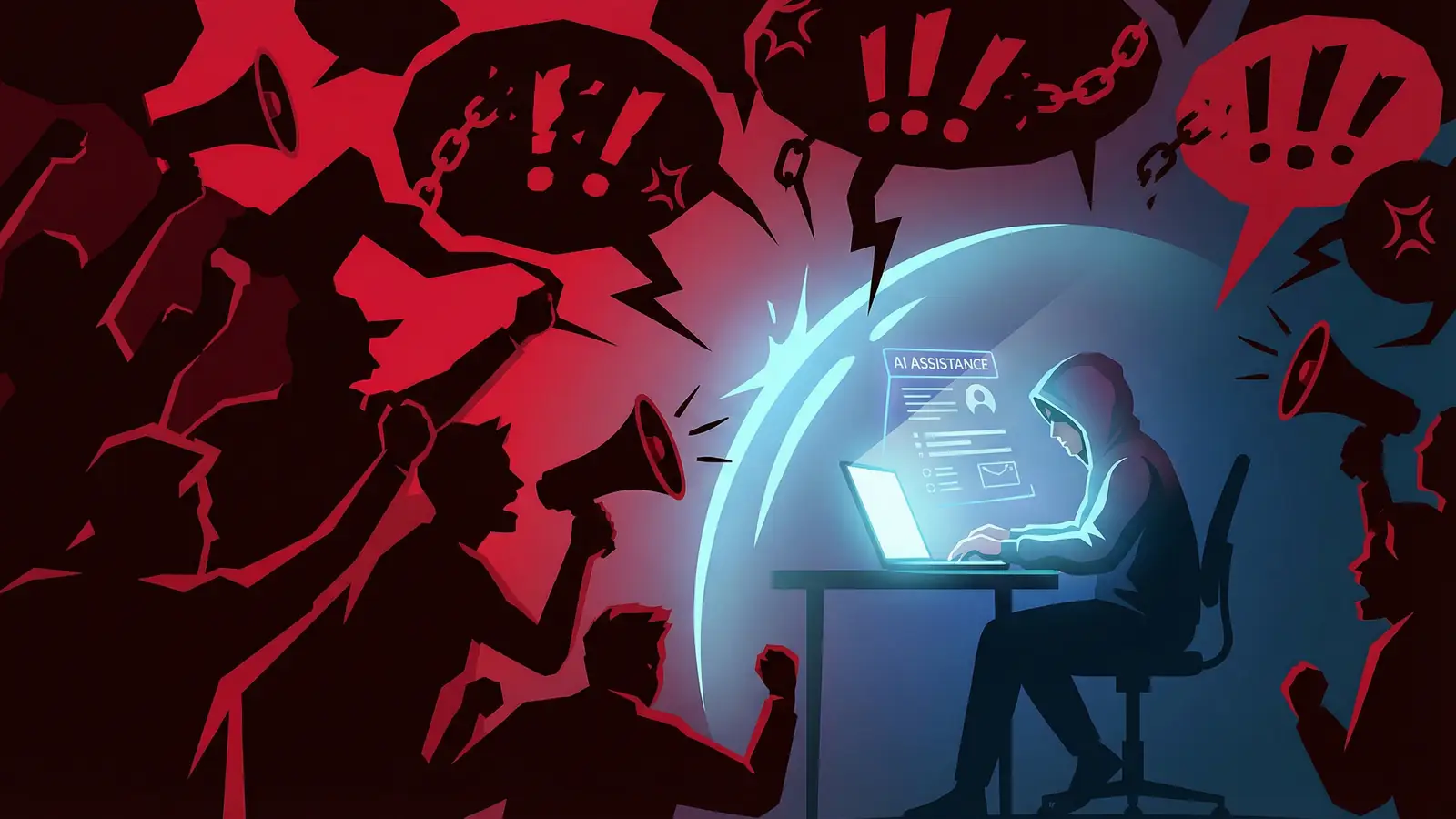
Someone posts about a positive experience using an AI tool. Within the hour, they are called lazy, dishonest, and complicit in destroying entire industries. A small business owner shares how AI helped them write better customer emails. The replies range from condescending to outright hostile. A developer mentions using an AI coding assistant, and gets told they are "part of the problem."
If this sounds familiar, you have been watching the same shift I have. What started as healthy scepticism about artificial intelligence has, in certain corners of the internet, hardened into something that looks a lot like tribalism. And the loudest voices in the room are often the ones with the least direct experience of the thing they are condemning.
This is not a defence of AI companies, their business models, or their training data practices. There are legitimate governance questions that need proper answers. This is about something else entirely: the growing pattern of people who have built "anti-AI" into their identity, and who treat anyone expressing a different view as an enemy.
Healthy Scepticism Has Crossed a Line
Scepticism is useful. Questioning new technology, asking who benefits, demanding transparency about how systems work: all of that is valuable. The history of technology is littered with products that overpromised and under-delivered, and anyone who remembers the blockchain hype cycle has earned the right to raise an eyebrow.
But what is happening now on platforms like LinkedIn and X goes well beyond scepticism. It is coordinated hostility. We explored a specific instance of this in a recent piece about the AI writing debate, where expressing any positive view of AI writing tools triggered immediate, aggressive pushback. That incident was not isolated. It was a symptom of a much wider pattern.
CNN Business reported in December 2025 that anti-AI sentiment had grown to the point where 2026 could be "the year of anti-AI marketing". Merriam-Webster chose "slop" as their 2025 word of the year, a term for low-quality AI-generated content. And Futurism reported that anti-AI backlash "grew massively" throughout 2025, with the first anti-AI hunger strikes occurring in San Francisco and London.
The backlash has entered politics too. Figures from both sides of the spectrum are positioning themselves as anti-AI, because that is where the emotional energy is. But here is the thing: emotional energy and informed analysis are not the same thing. And the former is drowning out the latter.
The Experience Gap
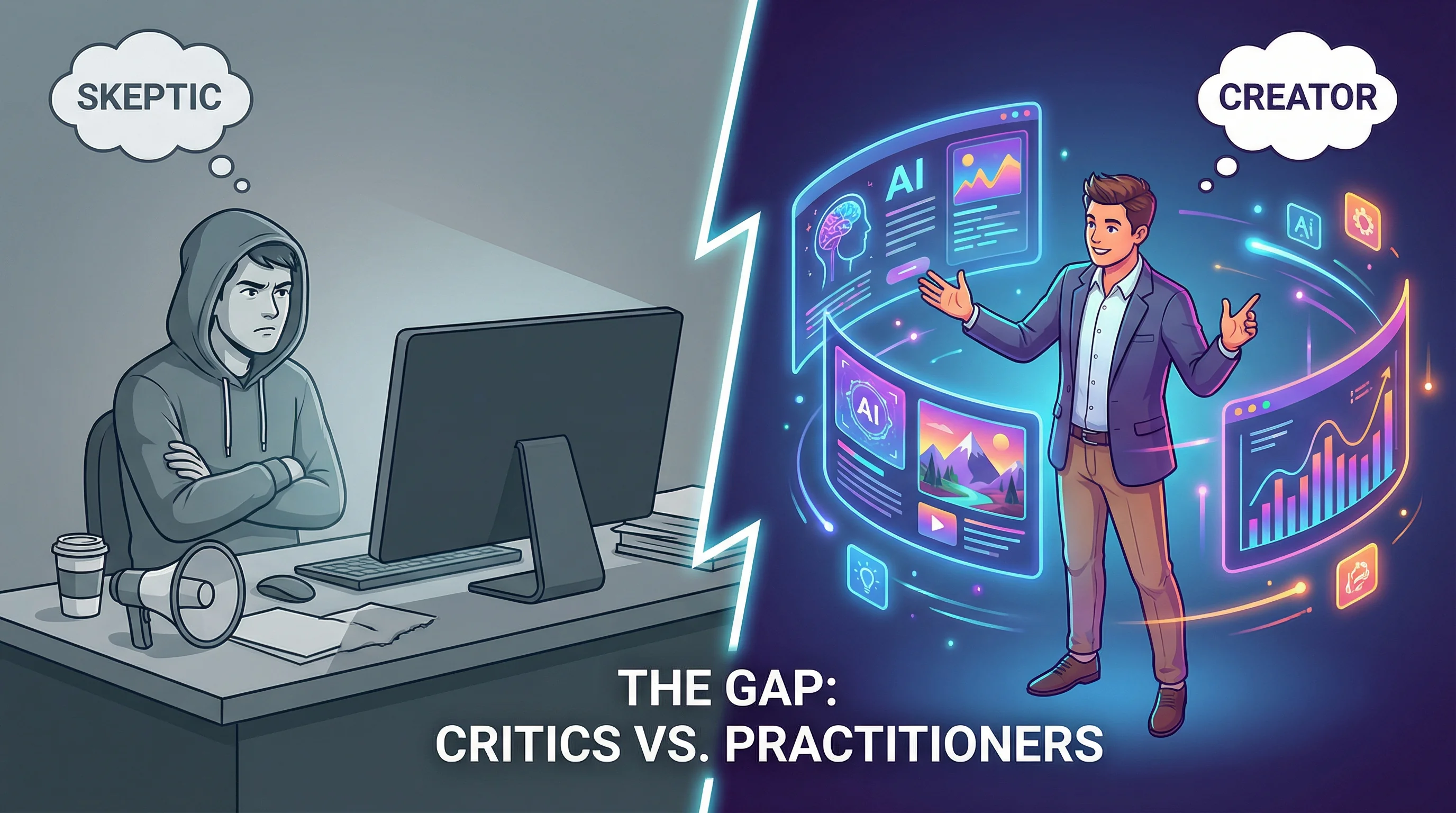
Here is the observation I keep coming back to: the most aggressive anti-AI voices are, almost without exception, people who have never spent serious time using AI tools themselves.
They have read about AI. They have seen examples of poor AI output shared on social media (nobody shares the good output; it does not generate outrage). They have absorbed the narrative that AI produces nothing but "slop." Some have taken it further, dismissing well-written content as AI-generated purely because it reads too clearly. And from that secondhand understanding, they have formed positions so rigid that no evidence or experience can shift them.
Ethan Mollick, Associate Professor at the Wharton School of Business and one of TIME's Most Influential People in AI, put it well: "I believe the cost of getting to know AI, really getting to know AI, is at least 3 sleepless nights." His point was that understanding AI requires real immersion, not casual observation. You have to push the tools, test their limits, discover where they fail and where they surprise you. Surface-level engagement tells you almost nothing.
When I first started using AI tools seriously, not just trying them once but integrating them into actual client workflows, I had my own "three sleepless nights" period. The tools did things I did not expect. They failed in ways I could not predict. And they succeeded in ways that changed how I approach certain tasks entirely. None of that understanding would have been possible from the outside looking in.
If you have not put in that work, your opinion about AI is based on other people's opinions about AI. That is not a foundation for the kind of absolute certainty many anti-AI voices project. It is the definition of an uninformed position presented as expertise.
The Luddite Parallel (and Where It Breaks Down)
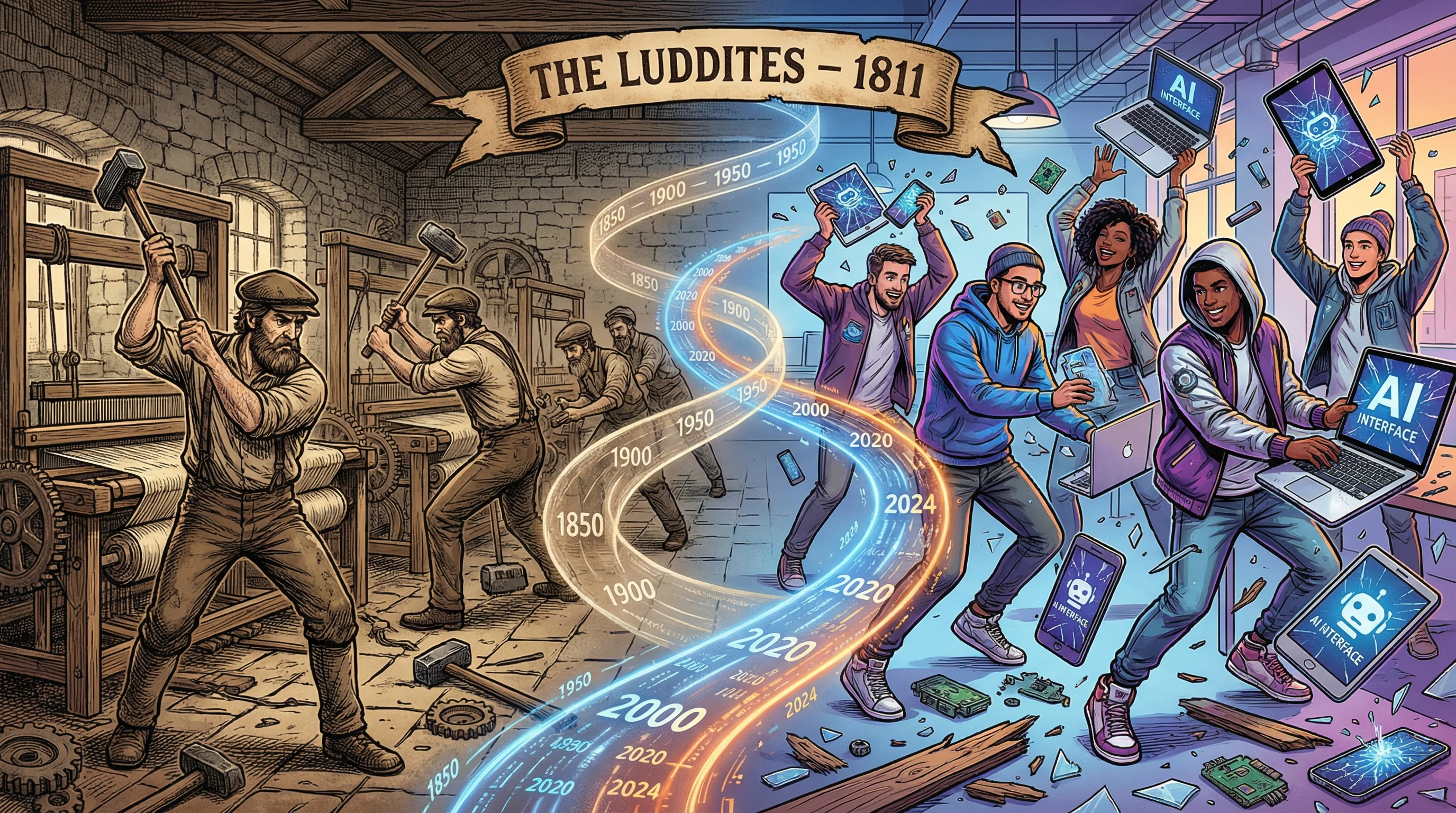
The comparison to the Luddites is obvious, and it is both more and less apt than people think.
The original Luddites were not simply afraid of machines. They were skilled textile workers whose livelihoods were being destroyed by industrial automation. Their grievances were economic and deeply personal. They were not anti-technology on principle; they were anti-poverty, anti-exploitation, and anti-displacement. The fact that history reduced them to a punchline about fearing progress is itself a form of injustice.
There is a real parallel with some anti-AI voices today. Writers, illustrators, and other creative professionals whose incomes have been directly affected by AI have a legitimate grievance. That is not extremism. That is economic anxiety, and it deserves a serious response.
Where the parallel breaks down is in the behaviour of the broader anti-AI movement. Reid Hoffman, co-founder of LinkedIn, addressed this directly in a conversation with Tyler Cowen:
"The losers are people who are uncurious, who want to live in the past, who don't care about learning the future. We have a term for this: Luddites."
Reid Hoffman, Co-Founder of LinkedIn, Conversations with Tyler
Hoffman's language is blunt, and I would soften it: the issue is not stupidity, it is rigidity. The original Luddites had direct experience with the machines they opposed. They understood exactly what they were fighting because their hands had operated the old looms. Many of today's loudest anti-AI voices cannot say the same. They are opposing something they have never meaningfully engaged with, and mistaking that opposition for virtue.
That is the critical difference. The original Luddites acted from experience. The new ones act from ideology.
It's a Tool. That's It.
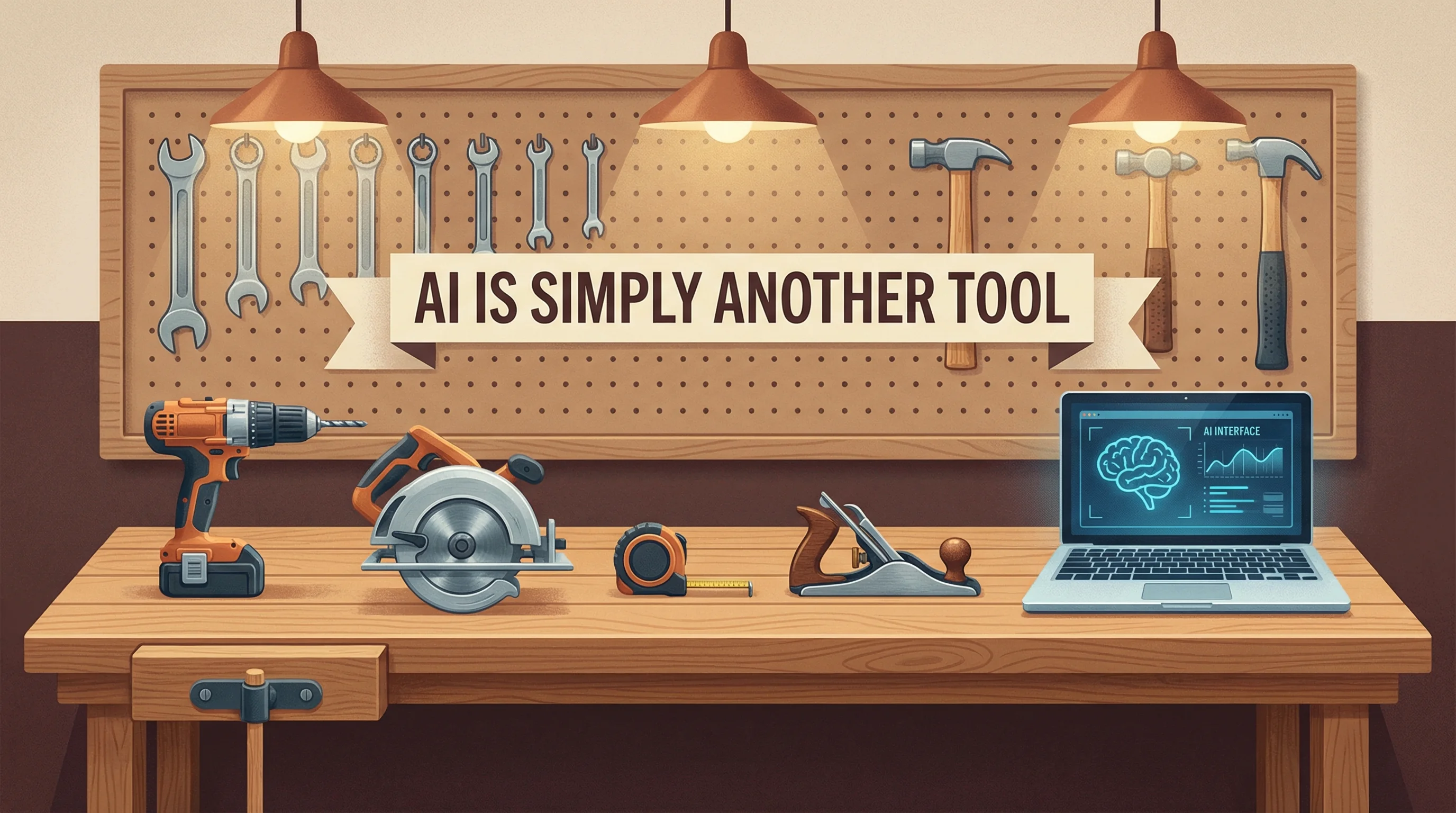
Microsoft CEO Satya Nadella said something in a Bloomberg interview that cuts through the noise: "I don't like anthropomorphising AI. I sort of believe it's a tool."
He went further, saying he wished the term "artificial intelligence" had never been coined, preferring "different intelligence" instead. And he is right. The name itself invites people to treat AI as a thinking entity rather than what it actually is: a system that processes input and produces output, with no understanding, no intention, and no agenda.
When I read the most extreme anti-AI arguments, I notice they almost always anthropomorphise the technology. AI "steals." AI "lies." AI "threatens." But AI does none of those things. People steal. People lie. People threaten. The tool itself is morally neutral, like every tool before it.
A drill does not replace a carpenter. It replaces the manual effort of making holes. The carpenter's skill, their knowledge of materials, their eye for design, their decades of experience: none of that changes because the drill got better. The same is true of AI. After more than thirty years in technology, from building systems for The Pentagon to designing websites for small businesses in Kettering, I can tell you that the value has never been in the tool. It has always been in the person holding it.
If you use AI and produce something mediocre, the problem is not the tool. If you use AI and produce something brilliant, the credit is not the tool's either. The skill is in knowing what to ask, how to evaluate the output, and when to override it entirely. That takes expertise. Real expertise. The kind you only get by actually working with these tools rather than shouting about them from the sidelines.
Use it, or don't. That is entirely your choice, and I respect either decision. But if you choose not to use it, do not pretend you understand what it can do. And do not attack people who have done the work you have not.
What UK Businesses Should Actually Do
If you run a small or medium business in the UK, here is how to navigate the noise.
Treat it as a procurement decision, not a moral one. Does a tool save you time? Does it improve your output? Does it reduce costs? If yes, evaluate it properly. You would not refuse to buy a new van because some people on LinkedIn think vans are destroying the courier industry.
Run a quiet pilot. If you face resistance internally or from clients, frame AI adoption as a "controlled experiment" rather than a "strategic pivot." Test it on one workflow. Measure the results. Let the data speak. The explosion of non-technical users adopting AI tools tells you everything about where this is heading. People who actually try it tend to keep using it.
Build governance, not walls. The best response to AI anxiety is not avoidance; it is structure. Human-in-the-loop review. Fact-checking processes. Clear policies about what AI is and is not used for. Executive accountability for AI outputs is not optional. But having a governance framework is more impressive and more effective than refusing to engage with the technology at all.
Prepare for AI-driven discovery. While the debate rages on social media, AI systems are already changing how customers find businesses. "It's not a standard yet" is not a strategy. Businesses that prepare for AI visibility now will be the ones that appear when someone asks ChatGPT or Google's AI Mode to recommend a service provider.
Ignore the culture war. Your competitors are not posting impassioned essays about whether AI is ethical. They are quietly integrating AI into their content workflows, their customer service, and their operations. When Anthropic launches plugins that handle legal contracts and financial analysis, the tools are not coming, they are here. The gap between businesses that adopt and those that hesitate only gets wider. And the gap does not care about anybody's feelings on the subject. The same energy gets wasted on SEO shortcuts like fake "Top 10" listicles that Google is now actively penalising.
Frequently Asked Questions
Is it fair to call anti-AI sentiment extremism?
When healthy scepticism tips into shouting down anyone who disagrees, suppressing contrary views, and attacking people for using a tool, it has moved beyond reasonable debate. The word extremism describes the behaviour, not the underlying concern. Legitimate worries about AI exist. Silencing everyone who holds a different view is not a legitimate way to express them.
Are there legitimate reasons to be concerned about AI?
Yes. Copyright questions around training data, job displacement in certain sectors, environmental costs of data centres, and the potential for deepfakes are all legitimate concerns. The issue is not with raising concerns. It is with conflating every use of AI into one moral category and refusing to engage with nuance.
Do you need hands-on experience with AI to have an opinion?
You can have an opinion about anything. But informed opinions carry more weight. As Ethan Mollick of Wharton Business School has noted, properly understanding AI requires serious engagement with the tools. If your entire position is based on what you have read about AI rather than what you have experienced using it, you are forming judgements without evidence.
How should businesses respond to anti-AI pressure?
Treat AI adoption as a business decision, not an ideological one. Evaluate tools on what they deliver: time saved, quality improved, costs reduced. If a tool helps your business serve customers better, use it. You do not owe anyone an apology for choosing effective tools.
Is AI just a tool or something more?
At the point of use, AI is a tool. It does not think, feel, or have intentions. It processes input and produces output. What makes it powerful is the skill of the person using it. A drill does not replace a carpenter. A calculator does not replace a mathematician. AI does not replace expertise. It amplifies it.
Will the anti-AI backlash affect business adoption in the UK?
It already is. Some UK businesses are hesitating to adopt AI tools because of social media pressure, while their competitors quietly integrate them. The businesses that treat adoption as a practical decision rather than a cultural statement will have a significant advantage.
What is the cost of not adopting AI for UK small businesses?
The cost is competitive disadvantage. Businesses using AI for customer service, content creation, and operations are reducing costs and improving speed. The UK Government estimates AI could boost productivity by 1.5% annually. For individual firms, that translates to hours reclaimed per employee per week from low-value tasks.
How is the anti-AI movement different from previous technology resistance?
The pattern is remarkably similar. Desktop publishing, email, search engines, and social media all faced resistance from people whose professional identity was tied to the old way of working. What is different about the AI backlash is the speed and intensity of the response, amplified by social media echo chambers that reward the most extreme positions.
Ready to Make AI Work for Your Business?
Whether you are exploring AI tools for the first time or want to ensure your business is visible to AI-powered search, we can help. From AI visibility to professional web design, we build what works. No ideology. Just results.
Get in TouchSources
- Conversations with Tyler: Reid Hoffman on the Possibilities of AI
- TIME: Ethan Mollick, The 100 Most Influential People in AI
- Business Standard: Satya Nadella on AI as a Tool
- CNN Business: Why 2026 Could Be the Year of Anti-AI Marketing
- Futurism: AI Backlash Grew Massively in 2025
- Fortune: Silicon Valley's Tone-Deaf Take on the AI Backlash


